IDENTITY
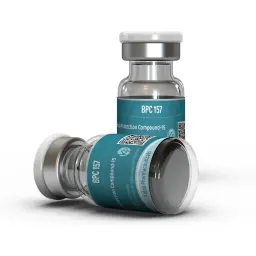
CompoundBPC-157
SubstanceSynthetic Pentadecapeptide
BrandKalpa Pharmaceuticals
Strength5 mg per vial
FormVial; formulation requires verification
ClassInvestigational Peptide Compound
PEPTIDE PROFILE
Peptide Length15 Amino Acids
OriginBased on a Gastric Protein Fragment
Research AreaGastrointestinal and Tissue Biology
EvidencePredominantly Preclinical
Clinical StatusInvestigational; Not an Approved Therapy
Human DataVery Limited
PHARMACOLOGY
Compound TypeSynthetic Peptide
Research FocusTissue Repair and Cytoprotection
Proposed PathwaysNO Signaling and Angiogenesis
Evidence BaseAnimal and Laboratory Studies
Human EfficacyNot Established
Approved IndicationNone Established
STORAGE & PACKAGE
BrandKalpa Pharmaceuticals
Package5 mg Vial
ContentsVerify Manufacturer Label
StorageFollow Verified Product Instructions
ReconstitutionNo Validated Consumer Protocol
SterilityCannot Be Assumed from Packaging
DOSING INFORMATION
BeginnerNo Established Human Dose
IntermediateNo Validated Athletic Dose
AdvancedNo Validated Athletic Dose
AdministrationNo Established Safe Route or Schedule
Dosage Unitsmg, mg/day and mg/week Are Not Validated
FrequencyNot Established in Human Trials
Typical DurationNo Evidence-Based Cycle Duration
5 mg VialLabel Strength Does Not Establish a Dose
Time PeriodNo Validated Day or Week Schedule
USAGE PROFILE
Research ContextPreclinical Tissue Biology
Sports InterestTendon and Muscle Recovery Research
Human RecoveryBenefit Not Established
Muscle GrowthNo Proven Anabolic Effect
PerformanceNo Proven Enhancement
Clinical DurationNot Established
RECOVERY PROFILE
Tendon RepairPreclinical Research Only
Ligament RepairPreclinical Research Only
Muscle InjuryHuman Benefit Unconfirmed
Recovery TimelineNot Established in Humans
Return to TrainingBased on Injury and Clinical Assessment
RehabilitationEstablished Care Remains Essential
RECOVERY & DISCONTINUATION
PCT RequiredNo Established PCT Protocol
Hormonal RecoveryNot Clinically Characterized
DiscontinuationStop Unsupervised Use
Side EffectsHuman Risk Profile Incomplete
Medical ReviewSeek Assessment for Adverse Effects
ImportantDo Not Substitute for Injury Treatment
STACKING & COMPATIBILITY
BulkingNo Validated Stack
Lean MassNo Proven Muscle-Building Combination
CuttingNo Established Fat-Loss Role
StrengthNo Proven Strength-Enhancing Effect
Other PeptidesCombination Safety Unknown
SupportNutrition, Sleep and Rehabilitation
MECHANISM OF ACTION
Primary TargetNo Validated Human Molecular Target
NO SignalingInvestigated in Experimental Models
AngiogenesisProposed Preclinical Effect
InflammationExperimental Modulation Reported
Tissue RepairPreclinical Findings Require Validation
Muscle AnabolismNot Established
PHARMACOKINETICS
AbsorptionHuman Data Insufficient
Half-LifeNot Established for Routine Human Use
DistributionIncompletely Characterized
MetabolismHuman Pathways Not Fully Defined
EliminationInsufficient Clinical Data
ExposureDepends on Formulation and Route
SAFETY PROFILE
Human SafetyInsufficient Evidence
ImmunogenicityPotential Risk
Product PurityRequires Independent Verification
ContaminationRisk with Unregulated Products
Injection RiskInfection and Tissue Injury
Long-Term EffectsUnknown
COMPARISONS & ALTERNATIVES
BPC-157Investigational Peptide
TB-500Different Investigational Peptide
GHK-CuCopper-Binding Peptide
CollagenDifferent Biological and Nutritional Role
PhysiotherapyEstablished Rehabilitation Approach
Comparison ScoresNo Reliable Efficacy Percentages Available
CHEMICAL PROFILE
SubstanceBPC-157
Peptide Length15 Amino Acids
SequenceGEPPPGKPADDAGLV
FormulaC62H98N16O22
Molecular WeightApproximately 1419.5 g/mol
CAS NumberNot Listed Here Without Verified Source
WHO IT'S FOR
- Athletes researching peptide pharmacology and experimental evidence
- Bodybuilding readers evaluating claims about tissue recovery
- Researchers studying preclinical musculoskeletal models
- Readers comparing experimental compounds with established rehabilitation
- Not established as a treatment for sports injuries or performance enhancement
BODYBUILDING USAGE
- BPC-157 is discussed in bodybuilding communities for tendon, ligament and muscle recovery.
- Most positive findings come from animal or laboratory experiments, not robust human trials.
- No validated mg/day, mg/week, injection-frequency or cycle-duration protocol exists for athletes.
- It is not established to increase muscle mass, strength, endurance or training capacity.
- Do not use experimental peptides to mask pain or accelerate return to training after injury.
- Progressive rehabilitation, adequate protein and energy intake, and sufficient sleep have established roles in recovery.
- Check applicable anti-doping rules before considering any investigational substance.
POTENTIAL BENEFITS UNDER INVESTIGATION
- Experimental effects on gastrointestinal mucosal protection
- Potential modulation of inflammatory signaling in preclinical models
- Investigated effects on tendon and ligament healing in animals
- Possible involvement in angiogenesis and cellular repair pathways
- Preclinical findings do not establish effectiveness in human athletes
- No proven benefit for hypertrophy or competitive performance
POTENTIAL RISKS
- Human adverse effects and long-term safety remain inadequately characterized.
- FDA identifies potential immunogenicity and peptide-impurity concerns for compounded BPC-157.
- Unverified products may contain incorrect concentrations, contaminants or undeclared ingredients.
- Injectable preparations carry risks of infection, tissue damage and administration errors.
- Unknown interactions and effects on biological signaling cannot be excluded.
- Delaying diagnosis or rehabilitation can worsen an underlying sports injury.
- Absence of reported adverse events in small studies does not prove safety.
PERFORMANCE PROFILE
Human Muscle Gain Evidence
5%
Human Strength Evidence
5%
Human Recovery Evidence
10%
These percentages are illustrative editorial indicators of the limited human evidence, not measured efficacy scores, clinical outcomes or estimates of an individual's response.
WHAT IS KALPA PHARMACEUTICALS?
Kalpa Pharmaceuticals is a brand name associated with products marketed in the performance-enhancement sector. The brand name alone does not establish the identity of the manufacturer, pharmaceutical authorization, product authenticity, sterility or independent quality verification for a specific BPC-157 vial.
Before evaluating any product, check the actual label, batch identification, manufacturer documentation and applicable regulatory status. Do not assume that a 5 mg vial is approved for human administration.
OVERVIEW
Kalpa Pharmaceuticals BPC-157 5 mg is presented as a vial containing BPC-157, a synthetic pentadecapeptide investigated in preclinical research involving gastrointestinal protection, inflammation and musculoskeletal tissue repair.
Interest among athletes and bodybuilders is driven largely by animal studies and proposed biological mechanisms. However, available human evidence is extremely limited, and there is no established clinical dose, validated bodybuilding cycle or proven human recovery benefit.
For a review of the evidence in sports medicine, see the systematic review of BPC-157 in orthopaedic sports medicine.
WHY CHOOSE KALPA PHARMACEUTICALS?
Brand selection should be based on verifiable product documentation rather than marketing claims. For an item labeled BPC-157 5 mg, important evaluation criteria include traceable manufacturing information, independently verifiable identity and purity testing, batch-specific analytical results, appropriate packaging and clear regulatory status.
A brand name, vial label or advertised peptide concentration does not independently demonstrate sterility, safety, efficacy or suitability for human use. No product-specific quality certification or regulatory approval is asserted here for Kalpa Pharmaceuticals BPC-157.
For additional information, review the FDA's safety information on BPC-157 and the peer-reviewed literature and patent review.
CONCLUSION
Kalpa Pharmaceuticals BPC-157 5 mg is presented as a vial of an investigational synthetic pentadecapeptide. BPC-157 has attracted research interest because of experimental findings involving gastrointestinal biology, inflammatory pathways and musculoskeletal tissue repair.
For bodybuilding and athletic audiences, the key distinction is between promising preclinical results and demonstrated human outcomes. Current evidence does not establish that BPC-157 improves muscle growth, strength, training recovery or return-to-sport timelines in people. The appropriate dose, administration route, treatment duration, long-term effects and interaction profile remain inadequately established.
There is no validated beginner, intermediate or advanced bodybuilding dosage in mg/week, no established injection schedule and no evidence-based cycle or post-cycle therapy protocol. A 5 mg vial strength describes the labeled quantity, not a recommended dose. Reconstitution instructions and sterility should not be inferred without verified product-specific documentation.
Athletes with tendon, ligament or muscle injuries should prioritize an accurate diagnosis, evidence-based rehabilitation and a medically supervised return-to-training plan. Competitive athletes should also verify current anti-doping requirements before using investigational compounds.
For further reading, consult the systematic review of BPC-157 and sports medicine, the review of musculoskeletal healing research and the FDA safety assessment.
DISCLAIMER
This page is for educational and scientific information only. It does not constitute medical advice, a prescription, an injection guide or a recommendation to use BPC-157 for bodybuilding, injury recovery or performance enhancement.
BPC-157 is not an established approved treatment for sports injuries or athletic performance. Human efficacy and safety data are insufficient to support a reliable dosing protocol. Do not infer dosage, reconstitution, administration frequency or cycle duration from the labeled 5 mg quantity.
Discuss injuries and treatment decisions with a qualified healthcare professional. Verify current laws, regulatory requirements and applicable sports anti-doping rules in your jurisdiction.
REFERENCES
Emerging Use of BPC-157 in Orthopaedic Sports Medicine: A Systematic Review (2025). PubMed
Regeneration or Risk? A Narrative Review of BPC-157 for Musculoskeletal Healing. PubMed
Multifunctionality and Possible Medical Application of the BPC-157 Peptide: Literature and Patent Review (2025). PubMed
Gastric Pentadecapeptide BPC 157 and Its Role in Accelerating Musculoskeletal Soft Tissue Healing. PubMed
FDA: Certain Bulk Drug Substances for Use in Compounding That May Present Significant Safety Risks. FDA Safety Information
Clinical and Translational Review of BPC-157 Research. NCBI / PMC
BPC-157 as an Investigational Peptide Therapeutic: Biopharmaceutical Challenges and Translational Development Barriers. NCBI / PMC
PubMed: BPC-157 and Musculoskeletal Soft-Tissue Research. PubMed Search
PubMed: BPC-157 and Tendon Repair Experimental Studies. PubMed Search
PubMed: BPC-157 and Skeletal Muscle Injury Research. PubMed Search
World Anti-Doping Agency: Prohibited List and Athlete Guidance. WADA